Executives are often asked to approve security projects as one-time capital decisions: replace the cameras, migrate access control, add audio, or consolidate a platform. That framing hides the real financial question. Security systems create value over time only when they are supported, governed, and modernized with discipline.
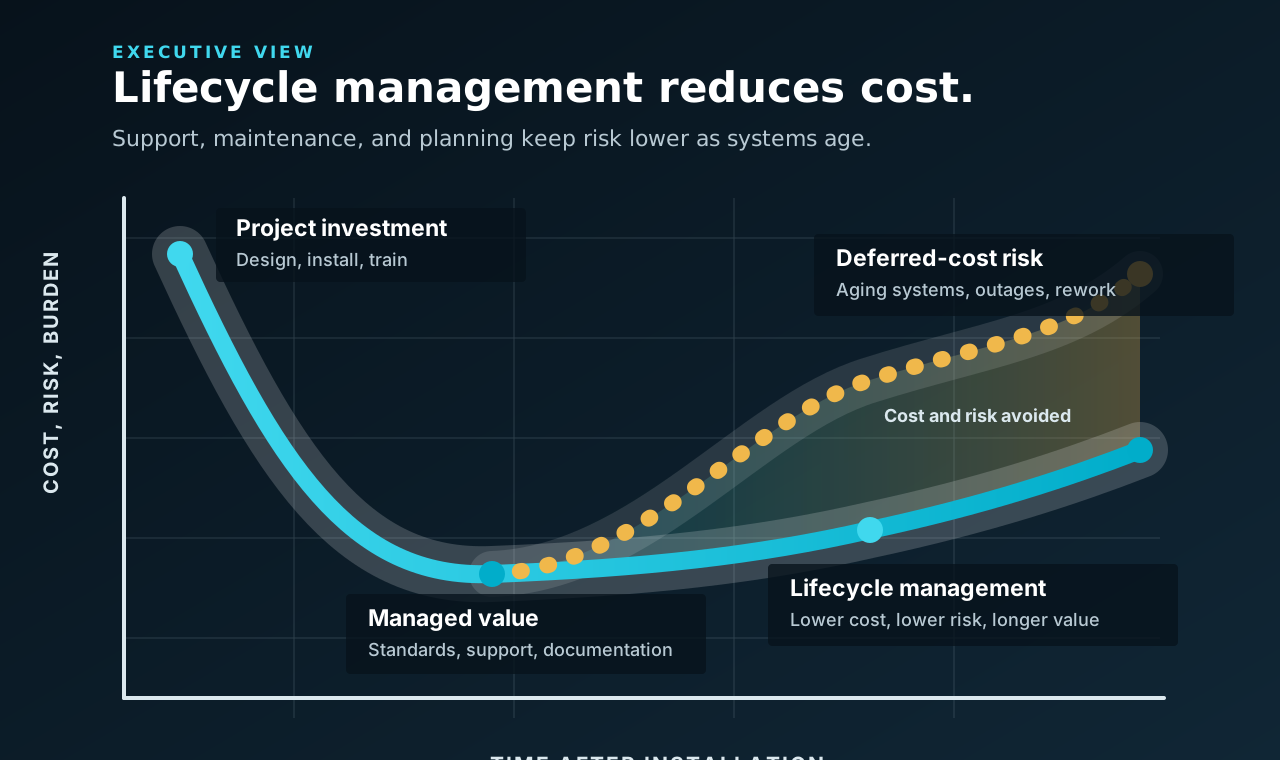
The lifecycle ROI curve is similar to a bathtub curve. Early cost is expected during assessment, design, installation, commissioning, and training. When the system is managed well, operating burden drops and the organization receives stable value from the investment. When maintenance, documentation, and governance are deferred, cost and risk rise again through outages, emergency replacements, rework, cyber exposure, staff frustration, and rushed capital requests.
What lifecycle management protects
Lifecycle management protects ROI by keeping the system closer to its intended operating state. It reduces the gap between what leadership funded and what staff can reliably use three, five, or seven years later.
- Budget predictability: asset visibility and roadmap planning reduce surprise replacement cycles.
- Operational continuity: preventive maintenance and support standards reduce avoidable downtime.
- Risk reduction: firmware, access governance, documentation, and platform standards reduce blind spots.
- Labor efficiency: clearer workflows reduce manual work for security, facilities, and IT teams.
- Decision quality: leaders can compare repair, replacement, migration, and standardization with better data.
The executive point
The cheapest security project is not the one with the lowest install price. It is the one that stays supportable, measurable, and useful across its lifecycle. A lifecycle partner helps leadership convert security spend from episodic emergency work into a managed operating model with clearer cost, risk, and operational outcomes.