
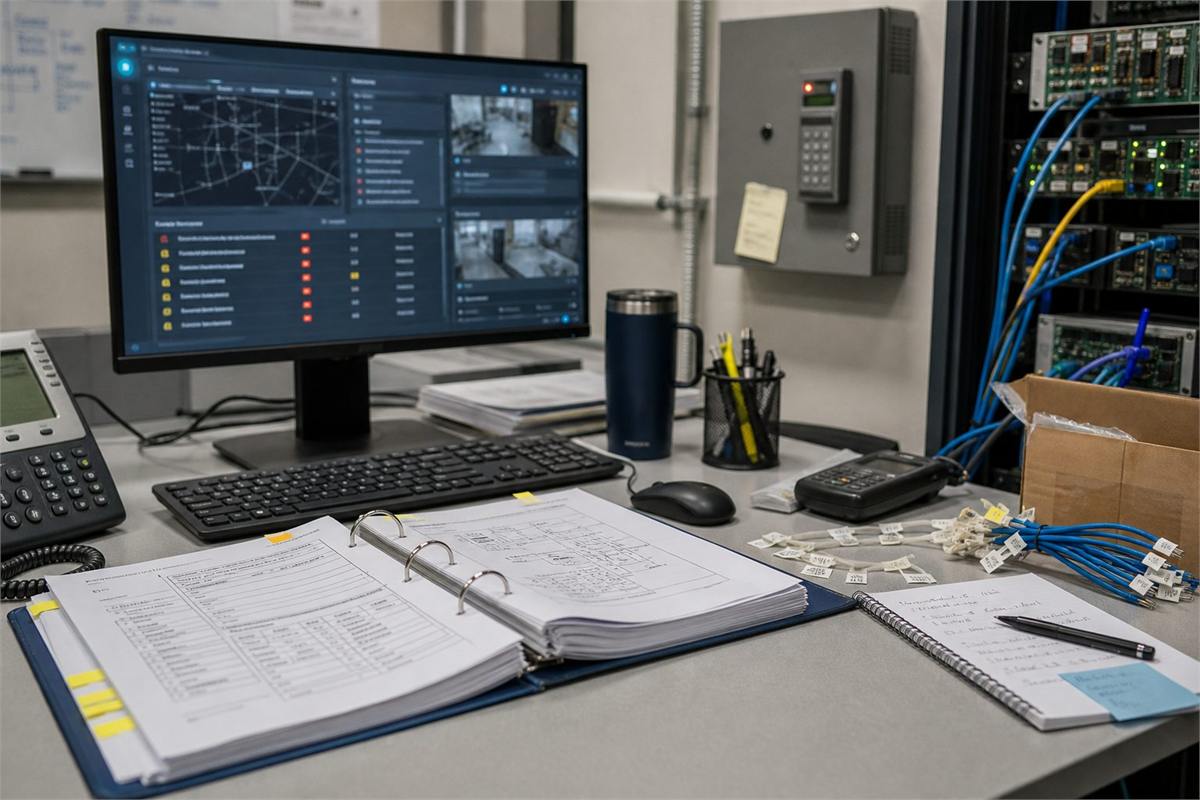
Many security projects look successful on go-live day. Cameras are online, doors unlock, dashboards load, and the project can be marked complete. The problem is that installation is only the beginning of the system's useful life.
Failure usually shows up later, after staff turnover, firmware changes, undocumented exceptions, missed maintenance, unclear ownership, and small service issues accumulate. What looked like a technology project becomes an operating burden.
The common failure pattern
The handoff is often too thin. The team receives equipment, but not a sustainable operating model. Documentation is incomplete, standards are informal, service history is scattered, and no one has a clear view of which assets are aging, unsupported, or drifting away from the original design.
- Ownership is split between security, facilities, IT, vendors, and local site contacts.
- Documentation does not match field conditions after change orders and exceptions.
- Training covers basic use, but not governance, escalation, or troubleshooting.
- Maintenance is reactive, so small issues become budget surprises.
- Modernization decisions happen under pressure instead of through a roadmap.
Installation is not the finish line
Security leaders need systems that can be maintained, governed, adapted, and measured after the initial project. Lifecycle management turns a capital project into an operational asset by assigning ownership, keeping documentation current, tracking asset health, and planning the next round of improvement before failure forces the decision.
The point
A project fails after installation when the organization only buys the system and not the operating discipline around it. Long-term value comes from standards, support, documentation, and accountability that continue after go-live.